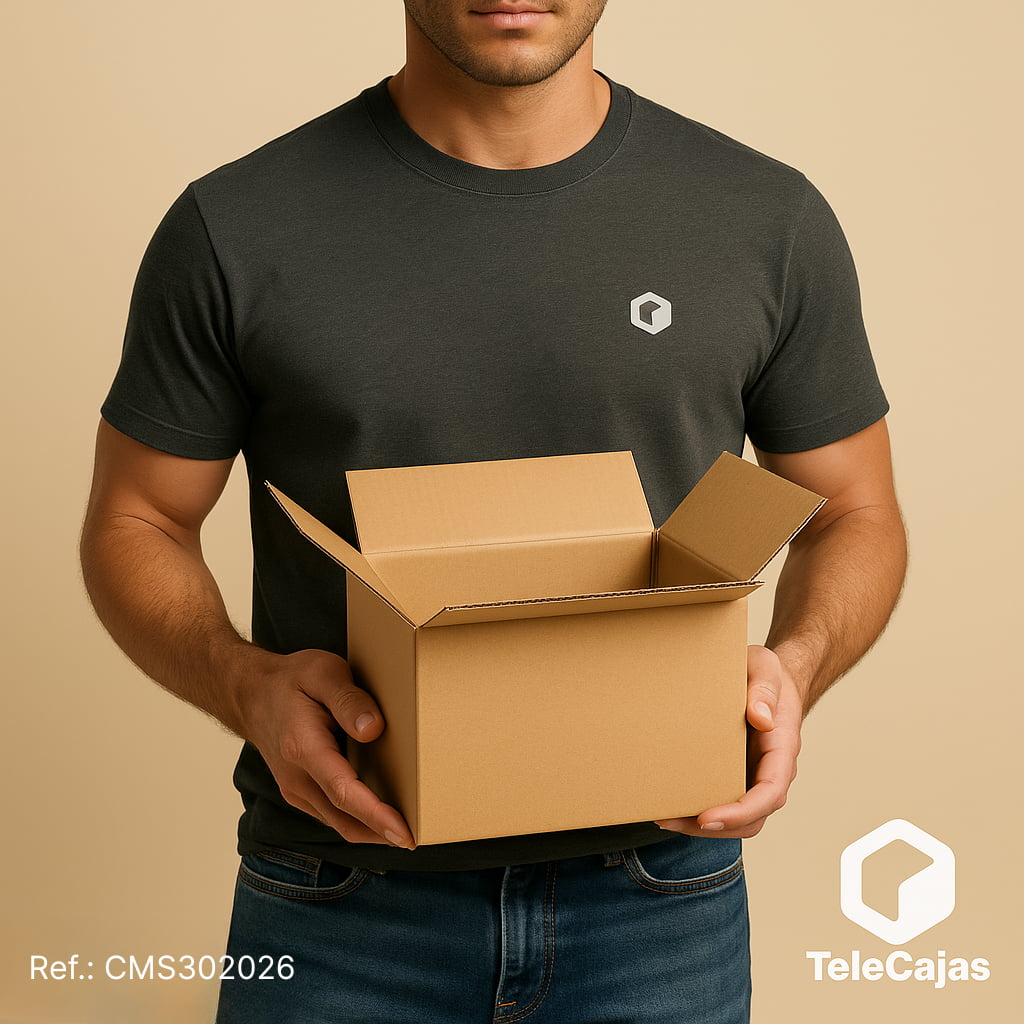
If you manage your company's, online store's, or warehouse's shipments, you've likely encountered a recurring question: what type of cardboard is best suited for packaging my products? The answer is not always obvious, as there are many types of cardboard with very different characteristics, strengths, and uses.
In this guide, we explain in detail each type of cardboard used in packaging—from cardboard stock to triple-wall corrugated cardboard—so you can make informed decisions and optimize both product protection and packaging costs. If you already know what you need, you can go directly to our size finder to find your box.

Why is it important to choose the right type of cardboard?
Choosing the wrong cardboard can have direct consequences for your business: damaged products during transit, unnecessarily high shipping costs due to over-packaging, or an unprofessional brand image. A purchasing manager who understands the differences between types of cardboard can reduce incidents, improve customer experience, and save money. If you want to delve deeper into how packaging impacts your company, consult our guide on cardboard packaging as a competitive advantage for your business.
Key factors to consider are mechanical resistance (how much weight it can bear), cushioning capacity (protection against impacts), grammage (weight per square meter), and, of course, cost.
General classification of cardboard types
Packaging cardboard types can be classified into four main families according to their structure and composition. Before diving into each one, it's worth remembering that cardboard is only one part of your product's packaging system:
- Cardboard stock: thin, smooth cardboard, single-ply.
- Solid board: several layers pressed without inner fluting.
- Corrugated board (or fluted board): structure with one or more fluted layers between smooth liners, which provides strength and cushioning.
- Micro-corrugated board: a variant of corrugated board with a very fine flute, ideal for presentation packaging.
Let's look at each one in depth.
Cardboard stock: what it is and what it's used for
Cardboard stock is a thin cardboard, generally between 300 and 600 g/m² in grammage, made up of a single layer of pressed fibers. It's the material you find in cereal boxes, cosmetic packaging, pharmaceutical cartons, and small food containers.
Main characteristics of cardboard stock
- Grammage: between 300 and 600 g/m².
- Structure: single-ply, without inner fluting.
- Surface: smooth, suitable for high-quality printing (offset, digital).
- Resistance: low to medium. Does not support heavy loads or stacking.
Most common uses
Cardboard stock is primarily used for primary presentation packaging: cosmetic boxes, medicine cartons, dry food containers, and point-of-sale displays. It is not suitable for shipping packaging, as it does not offer sufficient protection against impacts. If you want to know this material in depth—types of cardboard stock, finishes, and applications—we have a complete guide on cardboard stock.

Corrugated cardboard: the king of shipping packaging
Corrugated cardboard—also called fluted board—is the quintessential material for shipping boxes and logistics packaging. Its structure combines smooth layers (called liners) with fluted layers (called flutes or corrugations), creating a sandwich-like structure that offers an excellent balance of strength, weight, and cost. For an in-depth technical analysis (strength tests, regulations, flute types), consult our article dedicated to what corrugated cardboard is and how it's made.
Types of corrugated cardboard by number of flutes
The most important classification of corrugated cardboard is based on how many fluted layers it has:
Single wall
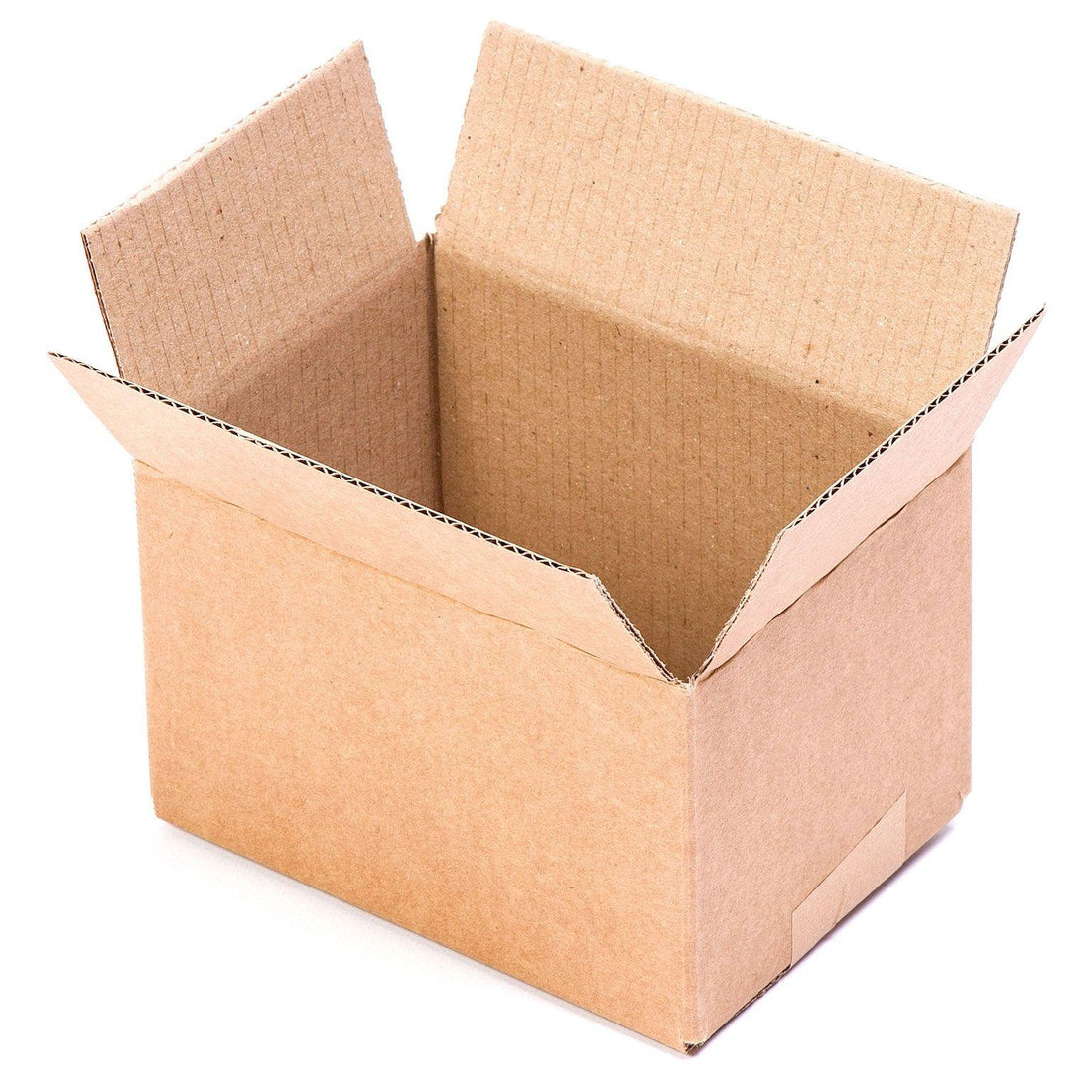
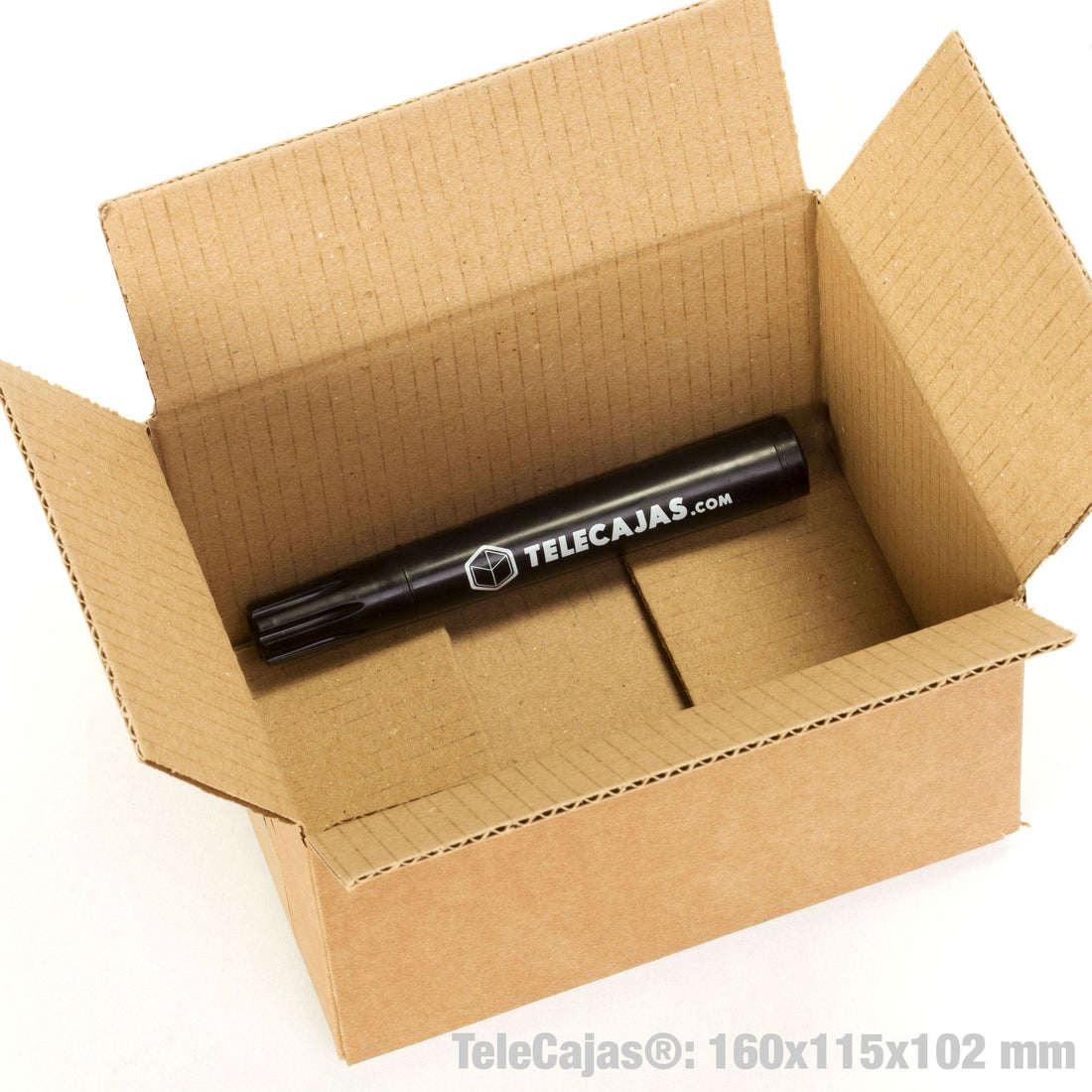
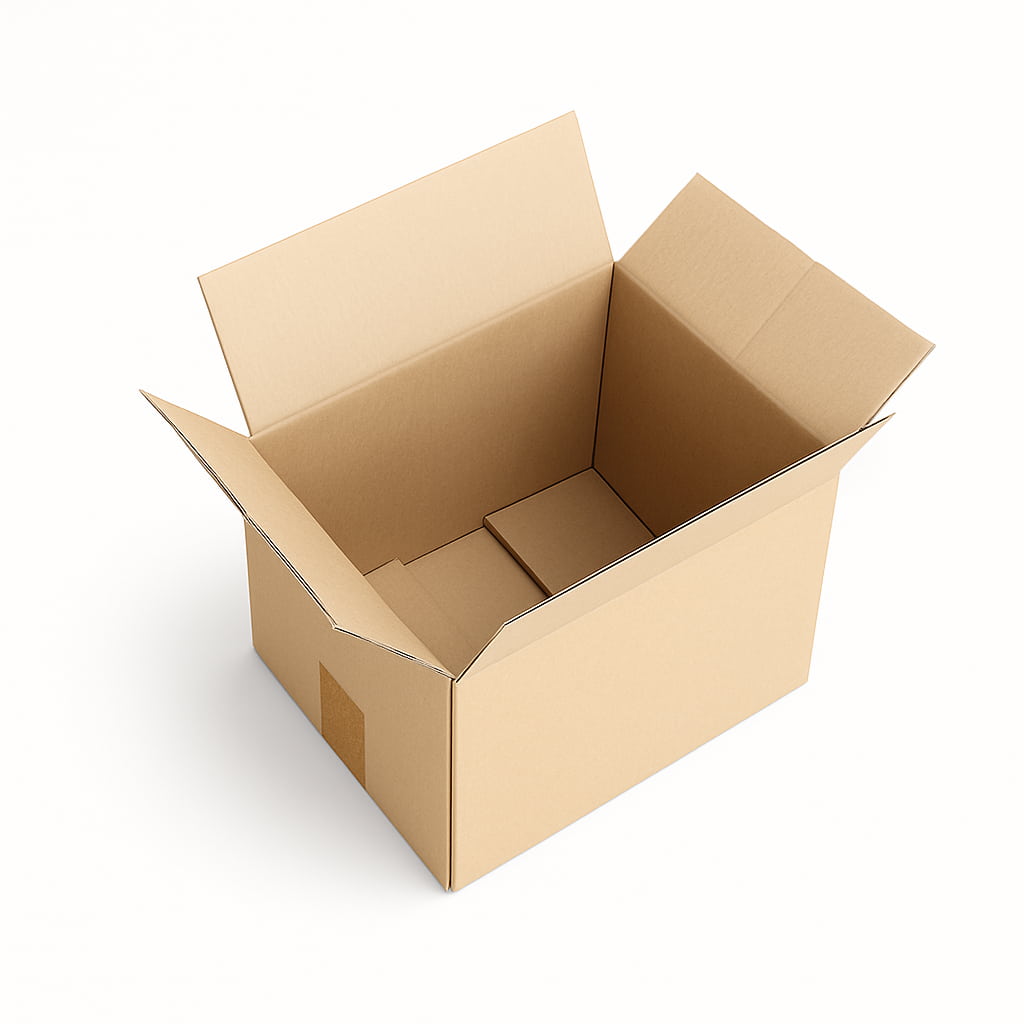
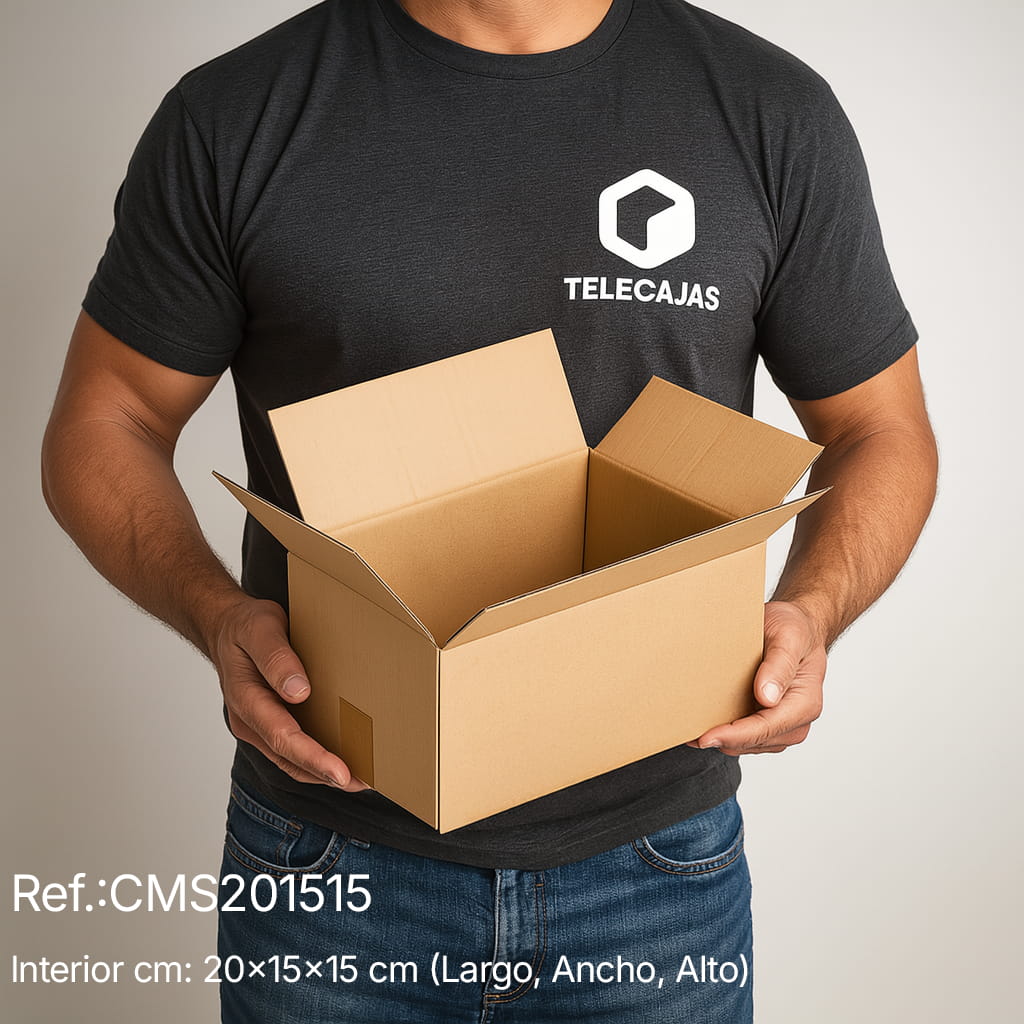
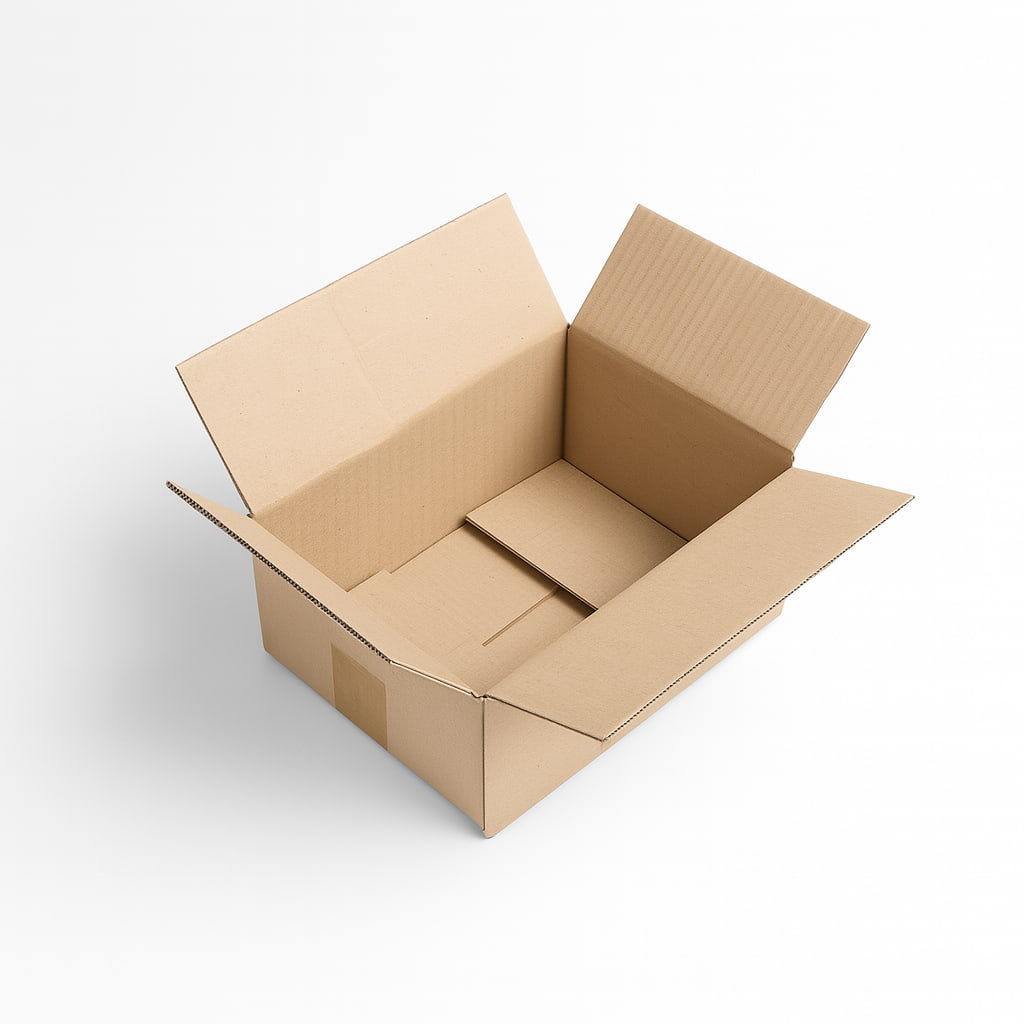
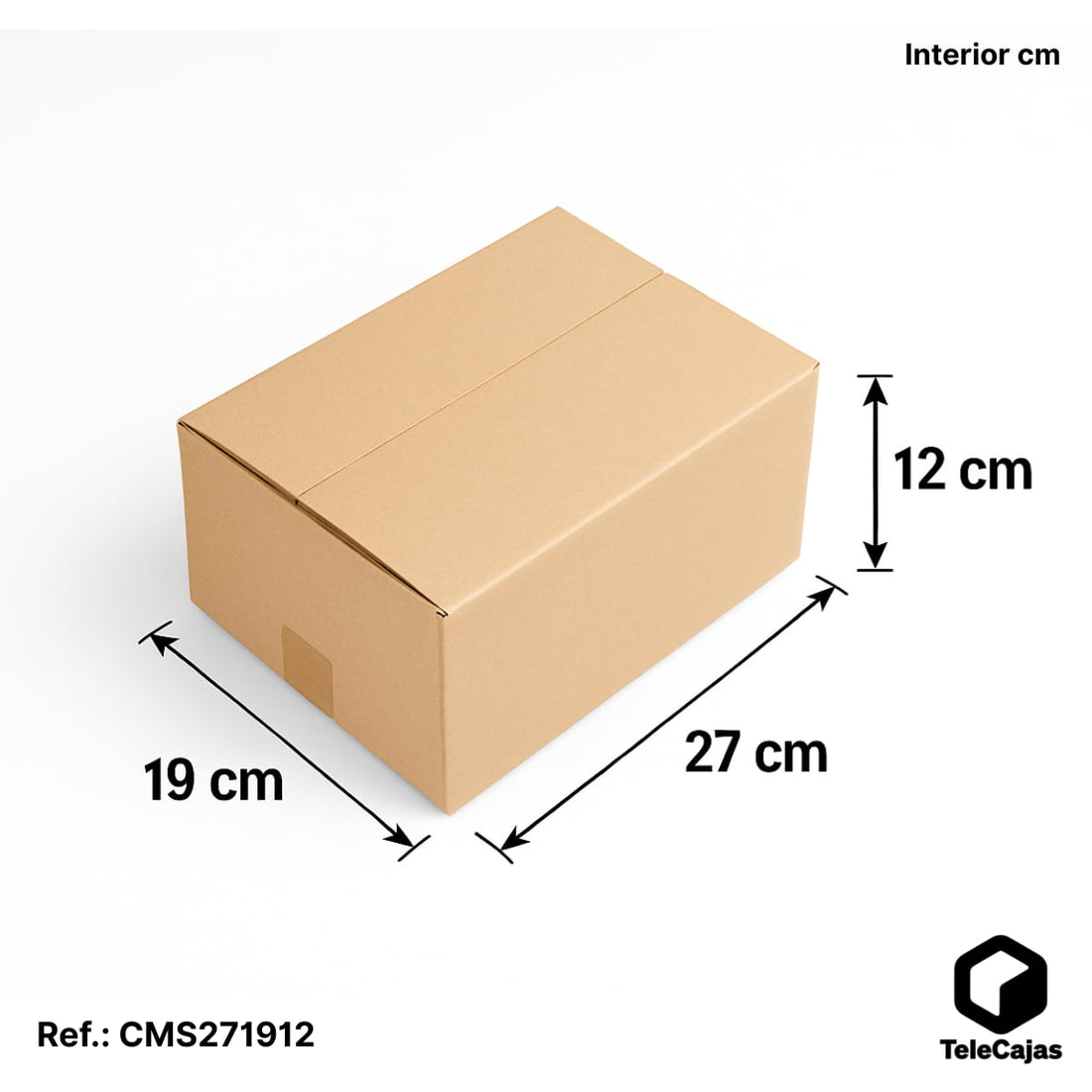
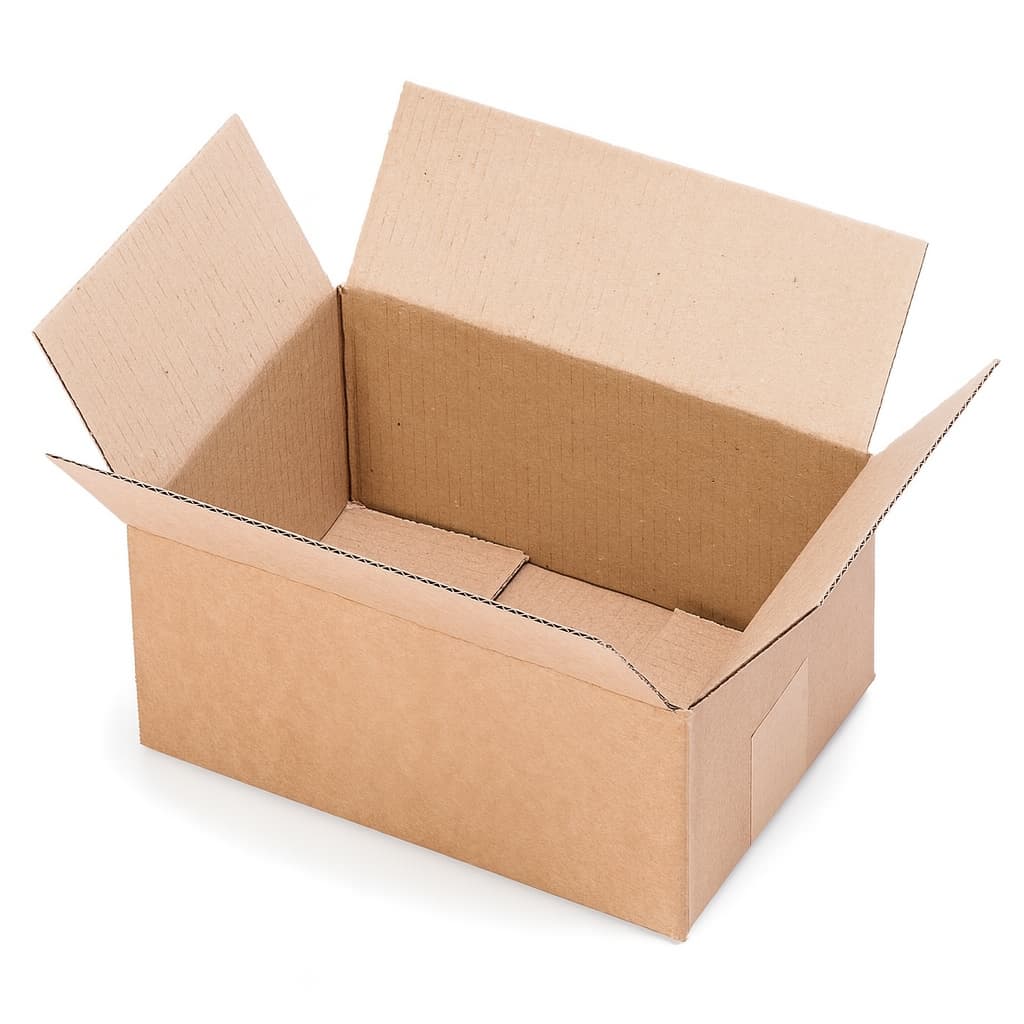
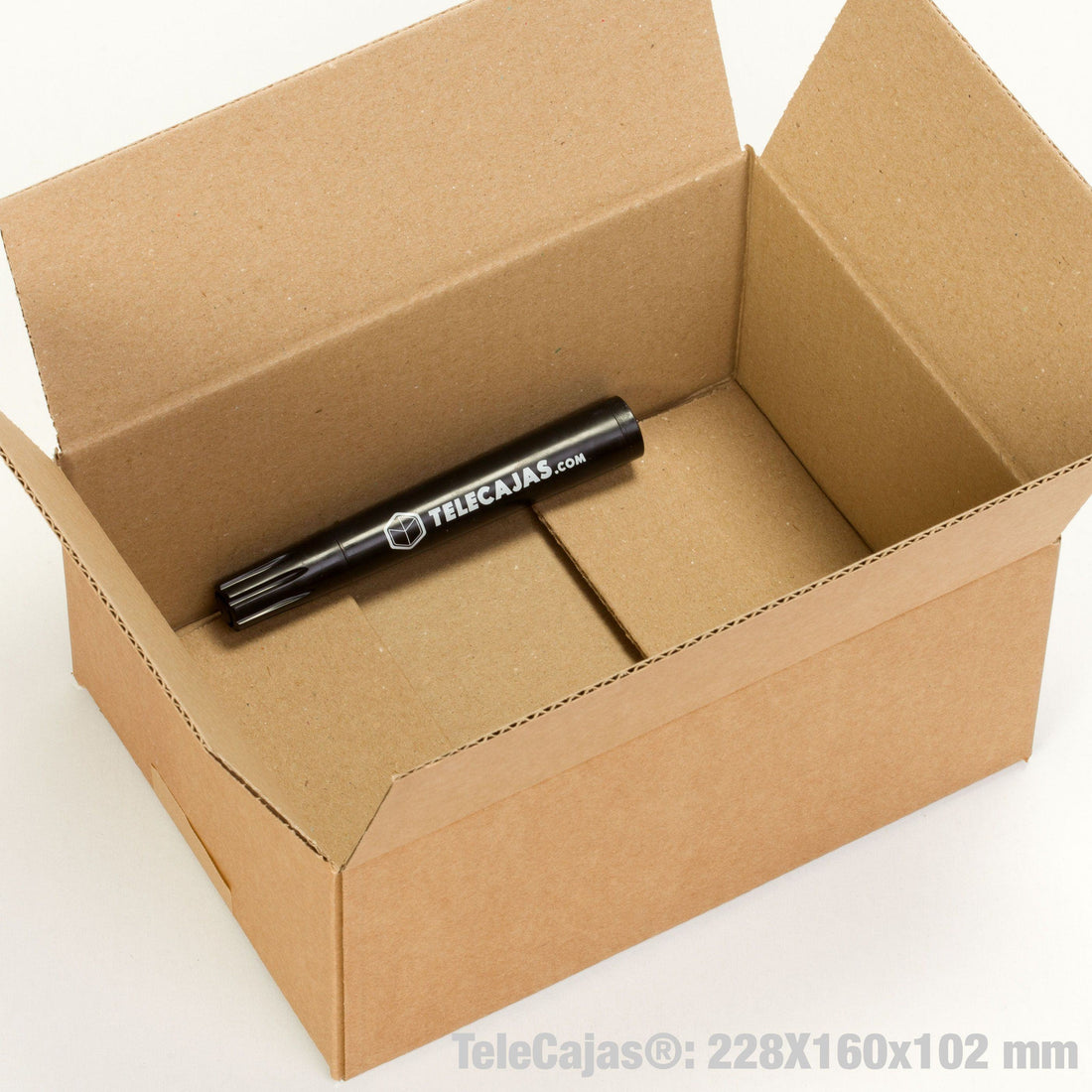
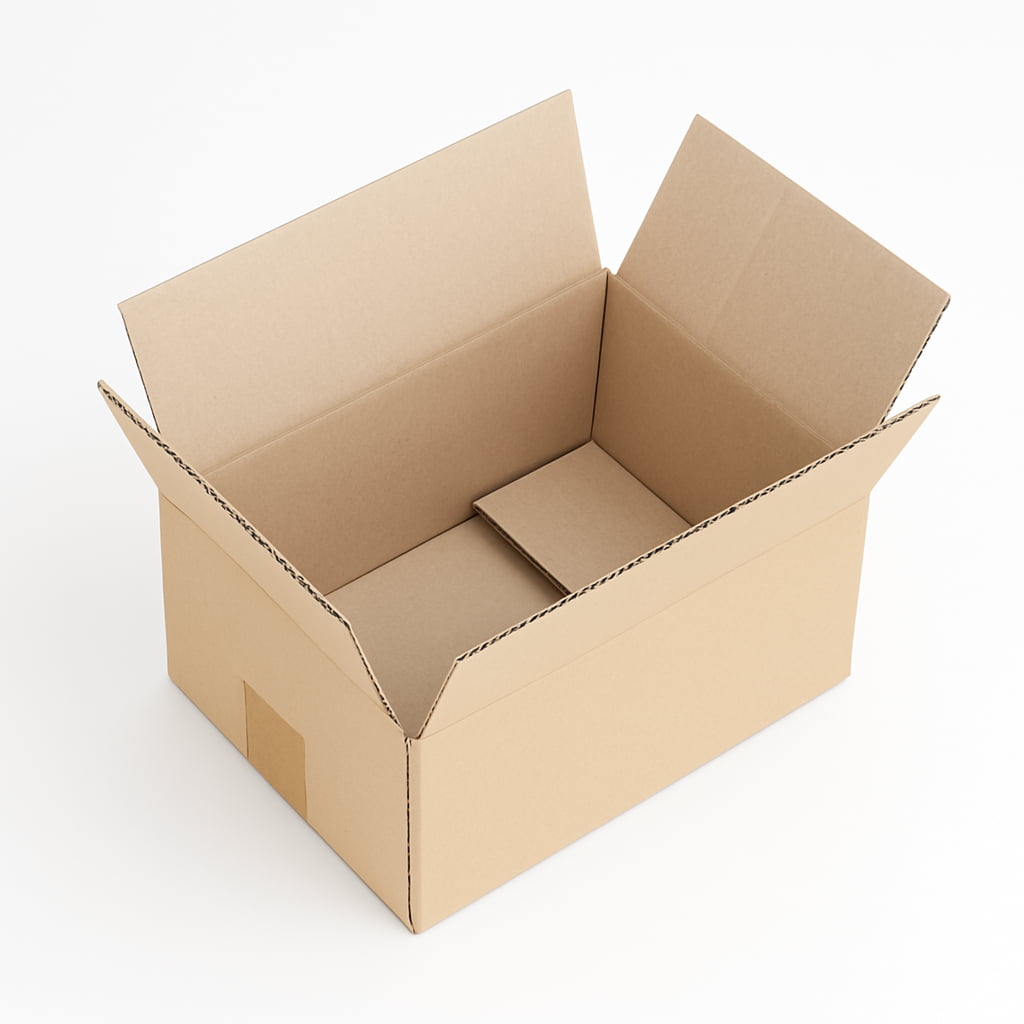
Composed of one outer liner + one flute + one inner liner. It is the most commonly used for standard shipping boxes. It offers good protection for light to medium-weight products (up to approximately 15-20 kg). It is the usual cardboard for affordable shipping boxes you can buy and receive at home when shopping online.
Double wall
Composed of two outer liners + two flutes + one intermediate liner. Significantly increases stacking strength and impact protection. It is used for heavy products (up to 30-40 kg), fragile items that require maximum protection, and for boxes that must withstand stacking on pallets during transport and storage. It is the cardboard you will find in our moving kits to protect the most delicate items.
Triple wall
With three fluted layers and four liners, triple-wall cardboard offers maximum strength. It is used for heavy industrial packaging, machinery, engine parts, and maritime export where transport conditions are more demanding. It can support loads of over 50 kg. If you work with these types of volumes, consult our catalog of large and giant cardboard boxes and our guide on pallet-sized large boxes.
Flute types by size
In addition to the number of layers, the flute size influences the cardboard's properties:
- A-flute (large): ~4.8 mm height. Maximum cushioning, ideal for fragile products.
- B-flute (medium): ~2.5 mm. Good balance between strength and a flat surface for printing.
- C-flute (intermediate): ~3.6 mm. The most versatile, combining cushioning and crush resistance.
- E-flute (micro): ~1.2 mm. Very smooth surface, excellent for printing. Used in micro-corrugated and presentation packaging.

Solid board: strength without fluting
Solid board is made up of multiple layers of cellulose pressed together, without any fluted layer. The result is a rigid, dense, and heavy sheet that offers high compression resistance.
Characteristics of solid board
- Grammage: between 700 and 2,000 g/m² or more.
- Structure: multi-ply pressed, no fluting.
- Rigidity: very high. Does not bend easily.
- Cushioning: low. Does not absorb impacts like corrugated board.
When to use solid board?
It is mainly used as a separator between products within a box, as corner reinforcement, as a rigid base for light pallets, and in the manufacture of folders, binders, and luxury rigid packaging (jewelry boxes, premium electronics, etc.).
Micro-corrugated board: presentation packaging
Micro-corrugated board is a variant of corrugated board with a very fine flute (E or F type, 1-1.5 mm). It combines the lightness and good printing surface of cardboard stock with superior strength thanks to its fluted structure.
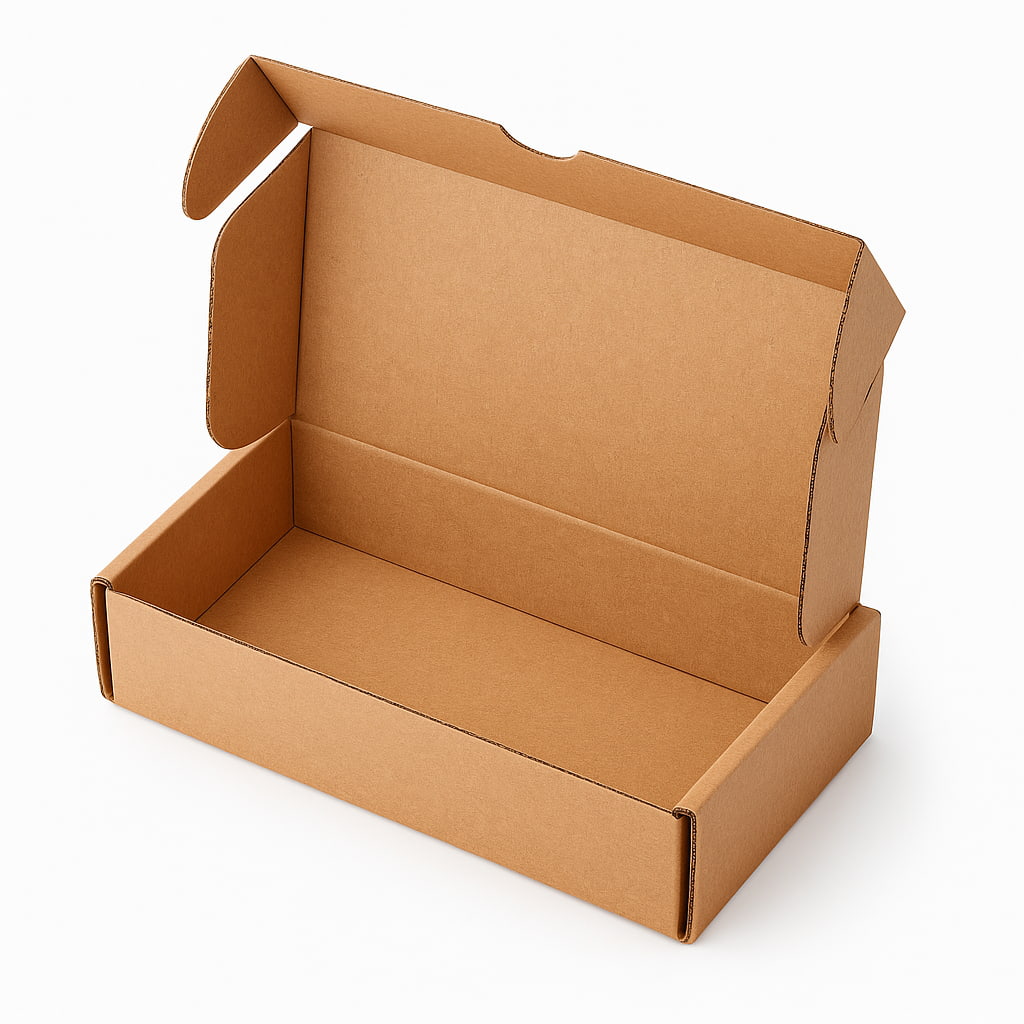
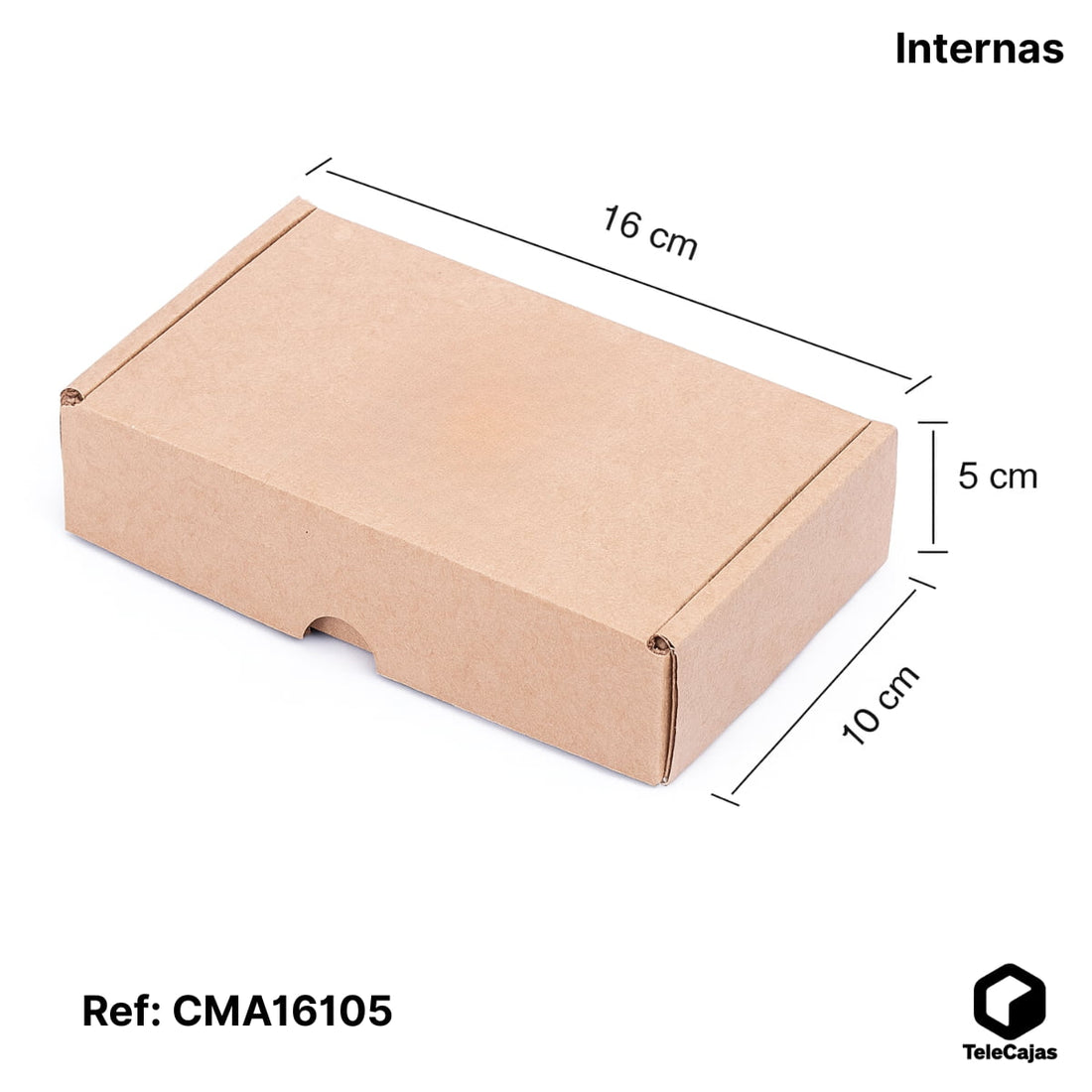
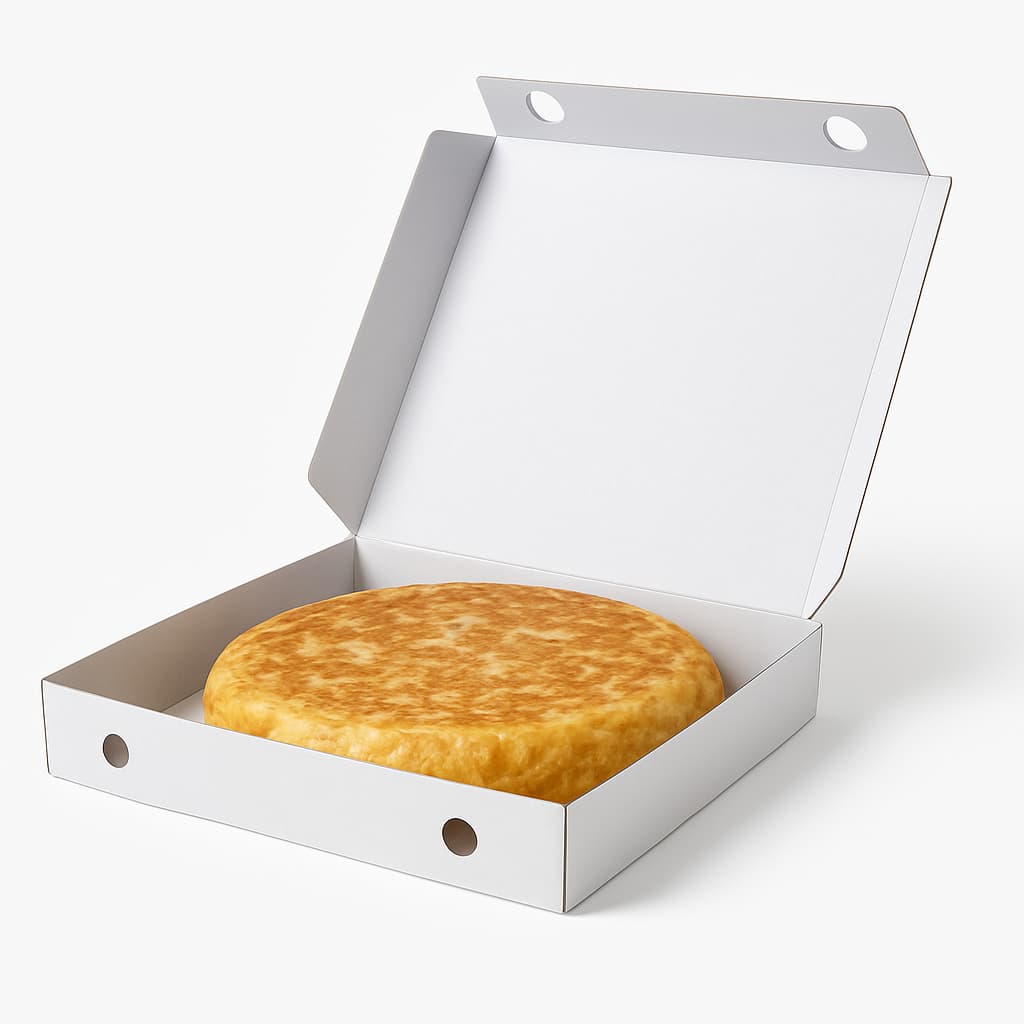
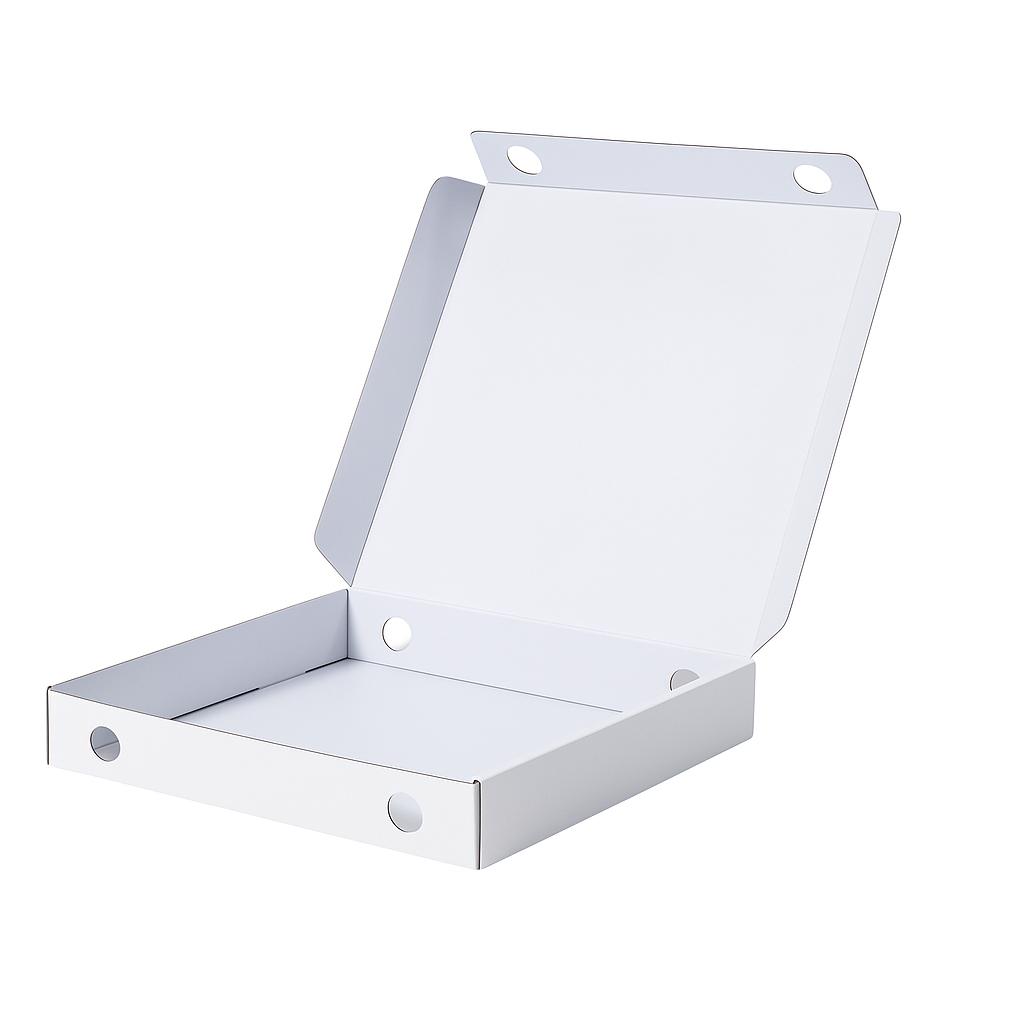
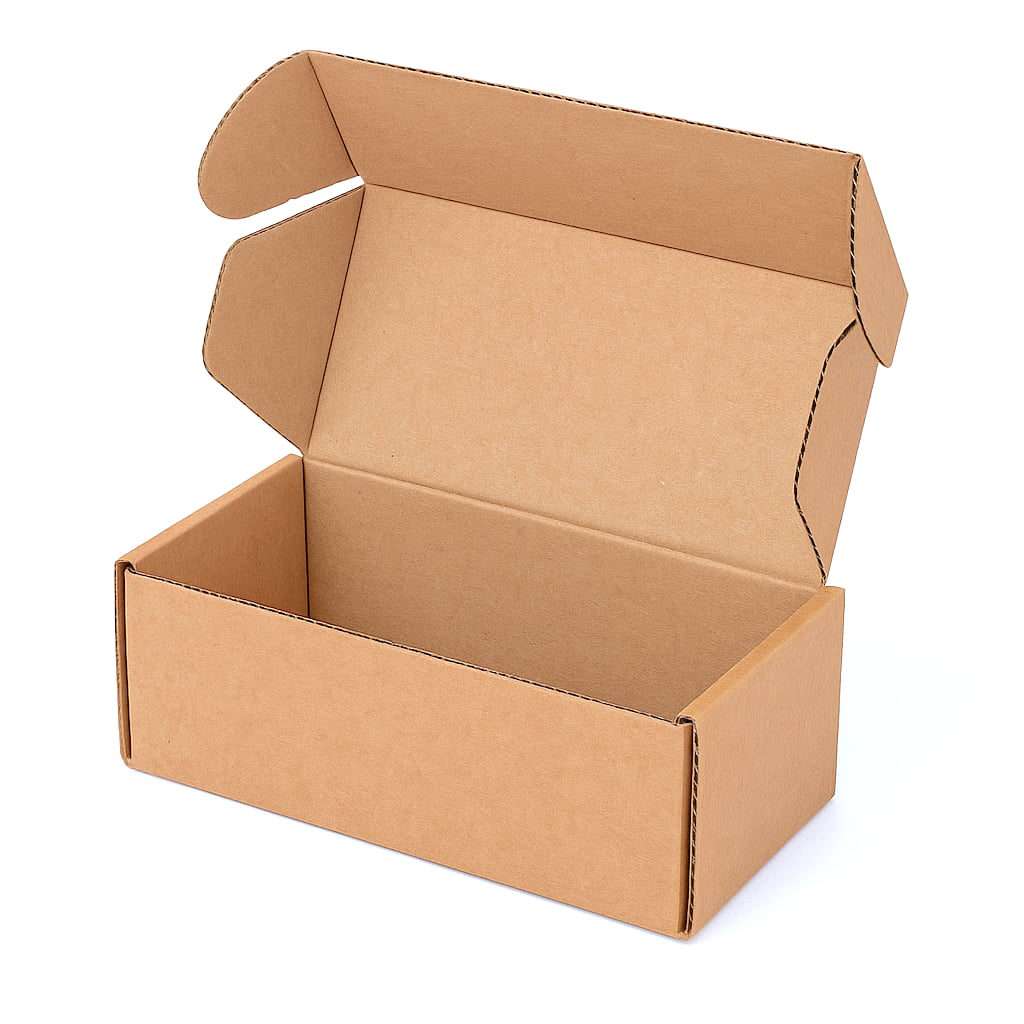
It is the chosen option by many e-commerce brands for their custom shipping boxes, as it allows for high-quality direct printing (logos, full-color designs) while maintaining the protection of corrugated board. If you have ever received a package from a premium brand with a full-color printed box, it was probably micro-corrugated. Self-assembling die-cut boxes are often made precisely with this material.

Comparative table: types of cardboard for packaging
To facilitate your choice, here is a comparative table with the main characteristics of each type of cardboard:
| Cardboard Type | Approximate Grammage | Strength | Cushioning | Printing | Primary Use |
|---|---|---|---|---|---|
| Cardboard stock | 300-600 g/m² | Low | Minimal | Excellent | Cartons, cosmetic and pharmaceutical packaging |
| Solid board | 700-2,000+ g/m² | High (compression) | Low | Good | Separators, reinforcements, rigid packaging |
| Micro-corrugated (E/F) | 400-600 g/m² | Medium | Medium | Very good | Branded e-commerce boxes, displays |
| Single-wall corrugated | 500-800 g/m² | Medium-high | High | Limited (flexo) | Standard shipping boxes (up to 20 kg) |
| Double-wall corrugated | 800-1,200 g/m² | High | Very high | Limited | Heavy, fragile products, stacking |
| Triple-wall corrugated | 1,200-1,800 g/m² | Very high | Maximum | Basic | Heavy industrial, maritime export |
How to choose the right cardboard for your product?
The choice of cardboard type depends on several factors. Here are the key questions you should ask yourself:
1. How much does your product weigh?
For light products (less than 5 kg), single wall is sufficient in most cases. For medium-weight products (5-20 kg), single wall with a high grammage or a C-flute is recommended. For heavy loads (over 20 kg), you will need double wall or even triple wall.
If the shipment is heavy, the 60x40x40 double-wall box.
2. Is it fragile?
Fragile products (glass, electronics, ceramics) need maximum cushioning. Opt for A or C-flute single wall, or double wall for valuable items. Always complement with internal void fill material (bubble wrap, polyethylene foam, or paper shred). If you are also wondering between boxes and envelopes for your light shipments, our comparison of cardboard boxes vs. shipping envelopes will be useful.
3. Do you need good printing?
If your priority is a box with quality printed design (logo, corporate colors, product information), choose micro-corrugated or cardboard stock. Standard corrugated board only allows low-resolution flexographic printing.
4. Will you be stacking the boxes?
If your boxes will be stacked on pallets for storage or transport, you need cardboard with high vertical crush resistance (ECT - Edge Crush Test). Double wall offers the best performance for stacking.

Difference between corrugated board and fluted board
One of the most frequent questions is: is corrugated board the same as fluted board? The short answer is yes. Both terms refer to the same material: cardboard with a structure of fluted layers between smooth liners. "Corrugated" comes from English, while "fluted" directly describes the shape of the inner layers. In the professional sector, they are used interchangeably.
The confusion usually arises because cardboard stock (which has no fluting) is sometimes mistakenly called "cardboard". To avoid misunderstandings, remember: if it has inner flutes, it is corrugated/fluted; if it is smooth and thin, it is cardboard stock.
Recycled cardboard: sustainability without losing strength
More and more companies are looking for sustainable options for their packaging. The good news is that recycled cardboard can offer very similar performance to virgin fiber cardboard, especially in single and double-wall grades.
Corrugated cardboard is one of the materials with the highest recycling rate in Europe (over 85%). By choosing boxes made with certified recycled cardboard (FSC, PEFC), your company contributes to the circular economy without sacrificing the protection of its shipments. At Telecajas, we work with recycled and recyclable materials throughout our cardboard box catalog.
Conclusion: choose wisely, package better
Knowing the types of packaging cardboard allows you to make smarter decisions as a purchasing manager, logistics manager, or online store owner. Each type of cardboard has its function: cardboard stock for presentation, single-wall corrugated for standard shipments, double-wall for heavy or fragile products, and micro-corrugated when you need to combine protection with brand image.
At Telecajas, you will find all these types of cardboard in a wide variety of sizes and formats, with fast shipping throughout the peninsula. Visit our complete box catalog, use our size finder to find exactly what you need, or discover where to find cardboard boxes according to your area. We serve Madrid and Valencia with 24-hour delivery.
Now that you know the types of cardboard, the next step is to choose the correct box. Consult our selection of cardboard boxes, flap boxes for warehouse and shipping, or self-assembling boxes for e-commerce. For a complete overview of all materials, read our packaging materials guide.